Understanding Delta Gap with an Anion Gap Calculator
Understanding Delta Gap?
The delta-gap value anion gap in chronic kidney disease is a useful way to assess whether an acid-base imbalance is restricted to one process or includes more than one pattern at the same time. It is most often used when a patient has metabolic acid buildup and the anion gap is elevated. In that setting, the delta gap helps calculate whether the drop in bicarbonate aligns with the rise in the anion gap.
That comparison matters because a single episode of metabolic acidosis does not always account for the full clinical significance of the lab results. If the anion gap rises more than expected, or if bicarbonate falls more than expected, the result may suggest a dual acid-base disorder. In other words, delta gap is a quick check for hidden complexity in acid-base status.
The concept is closely related to the delta anion gap and the delta comparison ratio. These measurements compare the change in the anion gap to the change in bicarbonate. They are not used to substitute for the rest of the evaluation, but they add a valuable layer of comparison when interpreting electrolytes.
In basic terms:
- The anion gap shows whether unmeasured acids may be present.
- The delta gap shows whether the bicarbonate change fits that rise.
- The result helps identify a possible hidden second disorder.
How an Anion Gap Calculator Works
An anion gap calculator is an instrument that employs basic electrolyte measurements to determine the anion gap rapidly. The calculation depends on the values for serum sodium, serum chloride, and serum bicarbonate. Most calculators use the standard formula:
Anion gap = Serum sodium - (Serum chloride + Serum bicarbonate)
This measurement assists in identifying whether there is an elevated level of unmeasured anions in the blood. When the result is above the expected reference range, it may suggest the presence of metabolic acidosis, especially high anion gap metabolic acidosis.
Here is why each value matters:
- Serum sodium contributes the main positive charge in the calculation.
- Serum chloride reflects one major negative charge that varies in response to acid-base shifts.
- Serum bicarbonate shows buffering capacity and often falls in metabolic acidosis.
A calculator can give a quick result, but the clinical value comes from interpretation. The same anion gap number can have different implications depending on the patient’s electrolytes, symptoms, and arterial blood gas findings.
For example, if serum bicarbonate is low and chloride is high, the pattern may fit normal anion gap metabolic acidosis. If bicarbonate is low and the anion gap is elevated, the evaluation moves toward high-gap causes and possible mixed patterns.
Delta Gap Equation and Step-by-Step Computing
The delta gap formula matches the measured rise in the anion gap with the anticipated fall in bicarbonate. The goal is to estimate whether the change is consistent or whether another factor is affecting the result.
The delta gap = Elevation in anion gap - Reduction in bicarbonate
An alternative way to state the process is through the delta ratio:
Delta ratio = (Measured anion gap - reference anion gap) ÷ (expected bicarbonate - Observed bicarbonate)
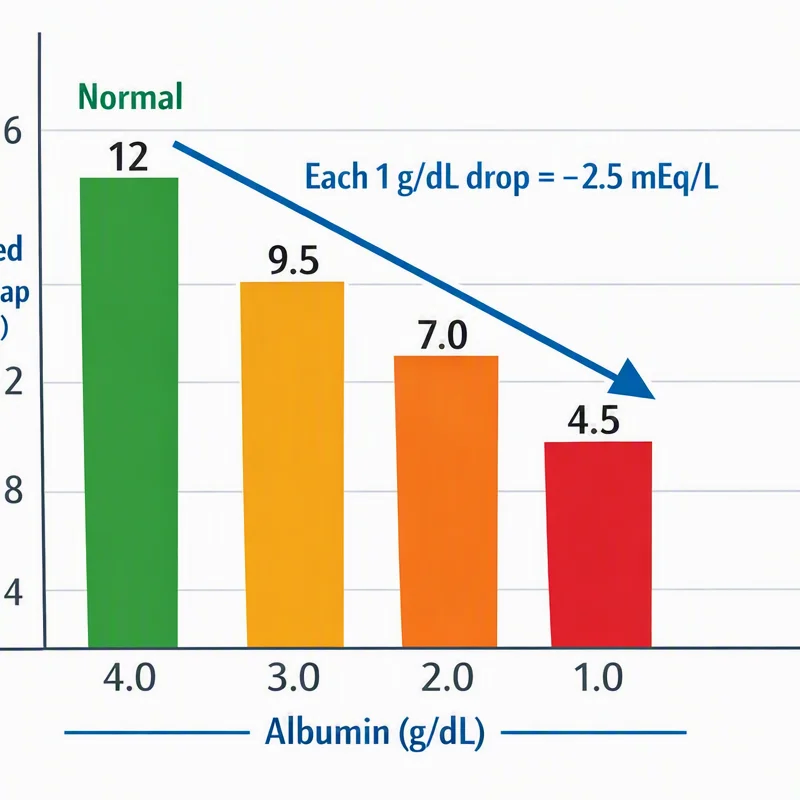
Before you calculate, you need a comparison range for the “normal” values applied in the comparison. A number of clinicians use a normal anion gap of about 12 mEq/L and a normal bicarbonate of about 24 mEq/L, but local lab ranges may differ. That is why the reference range should always be checked against the actual laboratory report.
In steps:
- Find the measured anion gap from the anion gap calculator.
- Subtract the normal anion gap to get the anion gap difference.
- Determine the bicarbonate deficit by subtracting the measured bicarbonate from the normal bicarbonate.
- Evaluate the two values using the delta gap formula or delta ratio.
Worked example:
Imagine a patient has:
- Serum sodium: 140
- Serum chloride: 100
- Serum bicarbonate: 14
First, calculate the anion gap:
140 - (100 + 14) = 26
If the normal anion gap is 12, then the delta anion gap is:
26 - 12 = 14
If the normal bicarbonate is 24, then the bicarbonate deficit is:
24 - 14 = 10
The delta ratio is then:
14 ÷ 10 = 1.4
This kind of result often suggests a common high anion gap pattern, but the full diagnosis still depends on the patient’s overall picture. The value becomes more useful when compared with the expected pattern for the suspected cause.
How to Interpret Delta Gap Results
Delta gap analysis is especially helpful after confirming high anion gap metabolic acidosis. The result helps identify whether the acid-base disorder is isolated or whether a second process is present.
Overall interpretation uses the idea that the increase in anion gap should closely match the decrease in bicarbonate. If the match is off, the result may point to an additional disorder.
Common interpretation patterns:
- Normal or near-normal delta ratio: often consistent with uncomplicated high anion gap metabolic acidosis.
- Low delta ratio: may suggest an added normal anion gap metabolic acidosis, because bicarbonate is falling to a greater extent than the gap is rising.
- High delta ratio: may suggest a concurrent metabolic alkalosis or chronic compensation, because the bicarbonate is not as decreased as expected for the size of the gap.
This is where mixed acid-base disorder detection becomes especially important. A single lab result can hide two different processes moving in opposite directions. The delta approach helps reveal that pattern.
For example, a patient with elevated anion gap and severe diarrhea could have both high-gap acidosis and normal-gap acidosis. Another patient with vomiting and ketoacidosis could have high-gap acidosis plus metabolic alkalosis. In both cases, the delta result gives a clue that the acid-base disorder is not uncomplicated.
Always interpret the result with the arterial blood gas, symptoms, and the rest of the chemistry panel. Delta calculations are a tool for evaluation, not a final diagnosis.
Common Causes of Unexpected Delta Gap
An atypical delta gap usually suggests a source of high anion gap metabolic acidosis or a combination of conditions. The main point is to link the result with possible causes and the patient’s medical context.
Lactic acidosis is a common source. In this scenario, lactate rises and increases the anion gap. If the bicarbonate drop is greater than anticipated, a second process may also be involved.
Ketoacidosis is one more classic cause. This can occur with diabetic ketoacidosis, starvation, or alcohol-related states. The anion gap becomes elevated as ketones accumulate, and the delta gap can help identify whether there is also a normal-gap acidosis or a metabolic alkalosis.
Renal failure can also produce a high gap because the kidneys are less capable to clear acids. In advanced renal dysfunction, the pattern may be altered by changes in chloride and bicarbonate management.
Toxic ingestion is an important consideration when the anion gap is raised. Certain toxins can produce severe metabolic acidosis with an abnormal delta result. In these situations, the delta gap should be assessed alongside history, exam findings, and the broader metabolic picture.
Additional causes of abnormal results can include:
- Profound dehydration with electrolyte shifts
- Multiple simultaneous disorders affecting chloride and bicarbonate
- Compensatory patterns that change the apparent bicarbonate deficit
The useful question is not only “Is the anion gap elevated?” but also “Does the bicarbonate change match the gap change?” That check is where the delta gap adds value.
Delta-gap versus Anion Gap: How Do They Differ?
The anion gap and delta ratio are connected, but they answer different points. The anion gap asks whether hidden anions are present in excess. The delta gap asks whether the size of the bicarbonate change matches the size of the anion gap change.
In other words:
- The anion gap is the first screen for an acid-base problem.
- The delta ratio and delta gap are next-step tools for advanced acid-base evaluation.
The delta ratio is often regarded interchangeably with delta gap in clinical discussions, although the exact formula may be presented differently. Both methods aim to compare the elevation in anion gap with the drop in bicarbonate. That comparison helps reveal whether a second Hop over to this website disorder is present.
For acid-base evaluation, the difference matters because the anion gap alone may overlook a hidden pattern. A normal-looking bicarbonate level can conceal a mixed disorder, and a high gap can appear with another process that shifts chloride or bicarbonate in the opposite direction.
So, the main difference is function:
- Anion gap: reveals an abnormal measurement pattern.
- Delta gap: analyzes the pattern and checks for mixed disorders.
When to Consider Delta Gap in Clinical Practice
Delta gap is most useful when the main question is focused on metabolic acidosis and the lab values are already suggesting a high-gap process. It is not usually the first calculation, but it is a helpful follow-up tool when the pattern is uncertain.
You should think about using delta gap when:
- The patient has altered electrolytes and low serum bicarbonate.
- The arterial blood gas shows acidemia and the chemistry panel points to metabolic acidosis.
- You need to evaluate whether there is a hidden second disorder.
- The patient may have metabolic alkalosis alongside acidosis.
In practice, this is a clinical assessment tool that works best after the initial diagnosis of metabolic acidosis is already established. It helps answer the question: “Is this only a high-gap process, or is something else happening too?”
Delta gap is especially useful when:
- There is suspected lactic acidosis or ketoacidosis.
- The bicarbonate level seems not low enough for the gap.
- The chloride level appears to be changing the acid-base pattern.
- The patient’s symptoms do not match a simple one-disorder explanation.
Because this calculation depends on accurate lab values, small measurement differences can alter the result. Always verify the serum sodium, serum chloride, and serum bicarbonate values before making a decision.
Common Questions About Delta Gap
How do you work out delta gap from an anion gap calculator result?
First, apply the anion gap calculator to determine the anion gap from serum sodium, serum chloride, and serum bicarbonate. Then subtract the normal anion gap to get the delta anion gap. Next, subtract the measured bicarbonate from the normal bicarbonate to get the bicarbonate deficit. Compare the two values using the delta gap formula or the delta ratio. This provides a quick estimate of whether the acid-base pattern is consistent or mixed.
What is the significance of a high delta gap?
A high delta gap often means the rise in anion gap is larger than the fall in bicarbonate. That can suggest an additional process such as metabolic alkalosis or chronic compensation. It may also mean the expected relationship between the gap and bicarbonate is not fitting the usual pattern for metabolic acidosis. The result should be interpreted with the rest of the clinical data, not alone.
What is the difference between delta gap and delta ratio?
Both terms are used to compare the change in anion gap with the change in bicarbonate. The delta ratio is usually written as a ratio, while delta gap may refer to the same comparison in a slightly different format. In practical acid-base evaluation, both aim to detect a mixed acid-base disorder and clarify the pattern behind high anion gap metabolic acidosis.
Is it possible for a normal anion gap to still show a mixed acid-base disorder?
Yes. A normal anion gap does not rule out a mixed disorder. A patient can have normal anion gap metabolic acidosis plus another condition, or one process can offset another and create a misleading result. That is why the overall acid-base balance, arterial blood gas, and electrolyte pattern all matter during evaluation.
At what point should delta gap be applied in metabolic acidosis?
Delta gap should be used after metabolic acidosis has been identified and the anion gap is elevated or potentially changing the pattern. It is especially helpful when you want to determine whether the result reflects only high anion gap metabolic acidosis or whether there is also normal anion gap metabolic acidosis or metabolic alkalosis. In short, use it when the diagnosis needs a deeper comparison of bicarbonate and the anion gap.