Anion Gap Calculator for Interpreting Blood Gas Results
What the Anion Gap Measures
The anion gap is a helpful way to measure the balance between measured cations and measured anions in the blood. It is commonly applied as part of a serum chemistry or an electrolyte panel to help detect an electrolyte imbalance and support clinical interpretation of acid-base disorders. In simple terms, the calculation contrasts serum sodium against serum chloride and bicarbonate to suggest whether unmeasured acids may be present.
An anion gap calculator is a useful diagnostic tool because it helps convert raw laboratory values into an actionable calculated value. That value can suggest a hidden metabolic derangement, especially when a patient is in an acidotic state. The result does not stand alone; instead, it provides an interpretation framework that includes symptoms, laboratory context, and blood gas findings.
The core idea behind the anion gap is that plasma must remain electrically neutral. If sodium is higher than what chloride and bicarbonate account for, the remaining difference corresponds to unmeasured ions such as lactate, ketones, or retained acids. This is why the anion gap is so useful for recognizing hidden acidosis and other disturbances that may not be obvious from pH alone.
How to Operate an Anion Gap Calculator
An anion gap calculator typically requires the patient’s serum sodium, serum chloride, bicarbonate, and in some cases serum albumin. Several tools can also use albumin correction to produce a more accurate corrected anion gap. Because albumin is a important unmeasured anion, low albumin can lead the gap to seem deceptively normal.
The most common calculation formula is:
Anion gap = Sodium − (Chloride + Bicarbonate)
Using this formula, the calculator provides a calculated value that can be compared with the normal reference interval. If the value is elevated, that points to anion gap elevation and may indicate high-gap metabolic processes. If the value is normal but acidosis is present, a different pattern may be present, such as hyperchloremic acidosis.
When using the calculator, enter in the same chemistry values used in the lab report. If serum albumin is available, apply albumin correction so the result better represents the true acid-base picture. This matters especially in critically ill patients, where low albumin can mask a significant acid load.
A practical practical approach is to check the anion gap after reviewing the serum chemistry, then compare it with blood gas results. This gives a more complete clinical interpretation than either test alone. In other words, the calculator is especially helpful when it is part of a broader bedside assessment rather than a standalone number.
Analysis of Blood Gases and Interpretation of Acid-Base Status
Blood gas testing adds essential perspective to the anion gap by showing the patient’s pH, CO2 partial pressure, and bicarbonate balance. An arterial blood gas is often used to assess oxygenation and ventilation as well as acid-base balance, while a venous blood gas can still be useful for pH and carbon dioxide patterns in many clinical settings. These tests can assist with interpretation, but they should be read with awareness of their limitations.
The pH tells you whether the patient is acidemic or alkalemic. The CO2 partial pressure helps determine whether the primary process is respiratory or metabolic, and bicarbonate represents the metabolic component. If the pH is low and bicarbonate is low, the pattern often points toward metabolic acidosis. If carbon dioxide is also low, that may suggest respiratory compensation as the body attempts to offset the acid load.
Blood gas analysis becomes especially useful when paired with the anion gap. A low pH with low bicarbonate and elevated anion gap strongly suggests a high-gap acid load. A low pH with low bicarbonate but normal anion gap may instead point to bicarbonate loss. This combination of findings supports a more precise acid-base diagnosis and avoids overreliance on a single calculated number.
It is also necessary to consider whether the blood gas is showing a primary metabolic problem, a primary respiratory problem, or a mixed disorder. The pH offers the overall direction, while the carbon dioxide partial pressure helps determine whether the lungs are compensating appropriately. That relationship is key to meaningful clinical interpretation.
Formulas, Reference Ranges, and Corrections
The usual anion gap formula is simple, but the interpretation is more nuanced. Most labs base it on sodium less chloride and bicarbonate, though some also add potassium. Because potassium is usually a minor contributor, many clinicians choose the basic version. What matters most is uniformity and knowing which reference interval is used to the lab method being used.
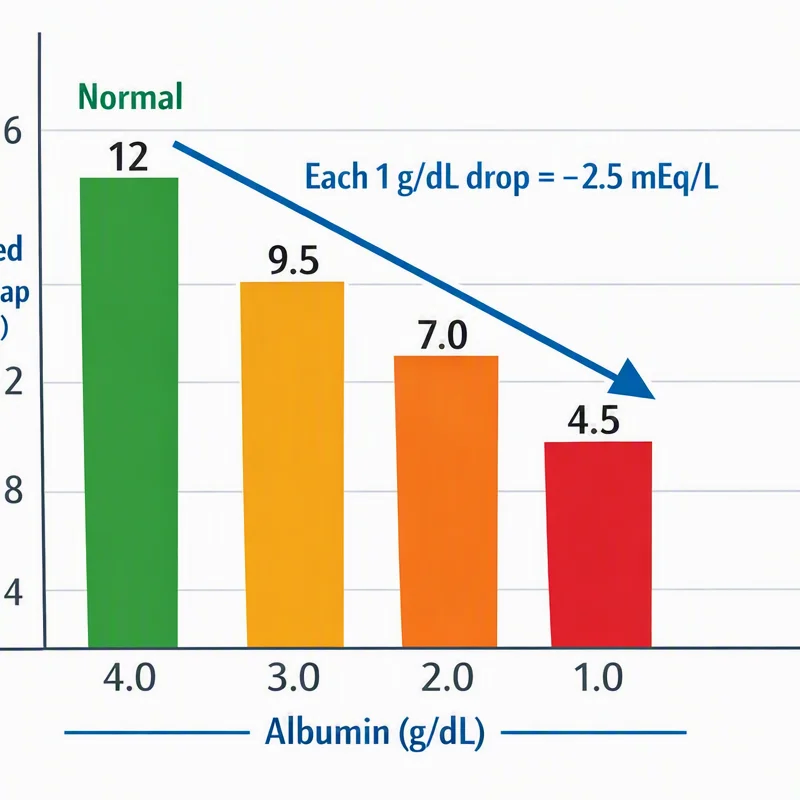
The reference range for the anion gap varies by laboratory analyzer and local reporting standards. A typical normal anion gap is commonly in the low to mid teens, but the exact range varies on the assay and whether potassium is included. That is why the number should always be interpreted in the context of the lab’s own reference interval rather than an assumed universal cutoff.
Albumin correction is crucial when serum albumin is low. Because albumin is a major unmeasured anion, hypoalbuminemia reduces the expected anion gap. Without correction, a patient may appear to have a normal value even though a significant acid burden is present. The result is a more precise corrected anion gap, which is particularly valuable in patients with chronic illness, inflammation, or fluid shifts.
The key practical lesson is that the anion gap should not be interpreted in isolation. The number is best viewed together with bicarbonate, pH, and carbon dioxide as part of a broader acid-base assessment. That integrated approach improves confidence and minimizes the risk of missing a clinically important metabolic disorder.
Increased Anion Gap Metabolic Acidosis
High anion gap metabolic acidosis happens when hidden acids build up in the bloodstream. This is considered one of the key patterns detected by the anion gap because it can identify serious illness early. In many cases, the anion gap is raised before the complete clinical picture becomes obvious, making it a valuable marker of developing metabolic acidosis.
Frequent causes include lactic acidosis, ketoacidosis, and uremia. Lactic acidosis can occur when tissue perfusion is impaired or oxygen utilization is disrupted, leading to lactate accumulation. Ketoacidosis occurs when ketones build up, often in states of insulin deficiency or prolonged starvation. Uremia reflects retention of acids and other waste products when kidney function is severely reduced.
From an interpretation standpoint, a high-gap disorder often produces a reduced bicarbonate level and a reduced pH. The respiratory system may respond by lowering the partial pressure of carbon dioxide through increased ventilation. That compensation can partly reduce acidemia, but it does not remove the underlying metabolic problem. This is why using blood gas analysis alongside the anion gap strengthens diagnostic accuracy.
High-gap metabolic acidosis can also coexist with other acid-base disorders. For example, a patient may have a high-gap process and a simultaneous metabolic alkalosis or respiratory disorder. In these cases, the anion gap calculator is a starting point, not the final answer. Careful review of the overall acid-base balance is required to avoid missing a mixed disorder.
Normal Anion Gap Metabolic Acidosis
Metabolic acidosis with a normal anion gap is also called chloride-associated acidosis. In this pattern, bicarbonate decreases but chloride rises enough to keep the overall gap within the usual reference interval. That outcome may still reflect a significant acid-base problem even though the anion gap itself is not elevated.
A frequent mechanism is bicarbonate loss. Base is lost by the body, and chloride increases as a compensatory change. This may happen with gastrointestinal losses such as diarrhea, where bicarbonate-rich fluid is depleted. In the appropriate clinical setting, the combination of low bicarbonate and high chloride points toward this pattern rather than a high-gap disorder.
A second major cause is renal tubular acidosis, in which the kidneys fail to properly acidify urine or reclaim bicarbonate. This causes a persistent acidotic state despite a normal anion gap. Because the mechanism differs from high-gap acidosis, the treatment approach may also differ. For this reason differentiating these entities matters in clinical interpretation.
A normal anion gap acidosis is a good example of why the anion gap calculator should be used together with blood gas analysis. Low pH together with low bicarbonate may indicate metabolic acidosis, but the anion gap tells you whether the problem is due to unmeasured acids or to bicarbonate loss with chloride retention. This separation is https://anion-gap-values230.rivetgarden.com/posts/anion-gap-calculator-for-acid-base-status-assessment central to the interpretation framework.
Common Assessment Missteps and Medical Pitfalls
A number of issues can distort the perceived anion gap and result in confusion. One of the most common is lab error, which can arise from sample processing, analyzer variation, or data entry errors. If the result does not fit the patient’s condition, the chemistry should be rechecked before making definitive conclusions.
Low albumin is another common pitfall. Since low albumin lowers the unmeasured anion pool, the anion gap may appear falsely normal. This is one reason correction for albumin is so important. Without it, a serious acid load can be missed, especially in admitted or critically ill patients.
Free calcium and other electrolyte shifts can also influence the broader acid-base environment. While they do not directly define the anion gap, they may influence the overall clinical picture and add to confusion if the analysis focuses only on one number. Thorough review of the electrolyte panel helps reduce this risk.
Another major pitfall is anion gap in chronic kidney disease relying on the anion gap without considering pH and carbon dioxide. A calculated value may be informative, but if the patient has a respiratory disorder or mixed acid-base pattern, the final conclusion can be partial. Good interpretation uses the anion gap calculator as one part of a larger diagnostic tool, not as a replacement for blood gas analysis.
Finally, reference interval differences between laboratories can produce seemingly different results. A result that seems slightly elevated in one setting may be normal in another depending on the analyzer, method, and reporting conventions. Understanding the local reference range is important for reliable clinical interpretation.
An FAQ on Anion Gap and Blood Gases
How do you calculate the anion gap from blood gas values?
You typically never calculate the anion gap from the blood gas alone. The anion gap calculator uses serum sodium, serum chloride, and bicarbonate from the chemistry panel. Blood gas analysis includes pH and partial pressure of carbon dioxide so you can understand the acid-base disorder more completely. If the blood gas reports a bicarbonate value, it can offer context, but the standard calculated value is still based on serum electrolytes.
What’s the normal anion gap range in adults?
The reference interval depends on the laboratory procedure and whether potassium is included. Many labs report a typical anion gap in the low-to-mid teens, but the exact range should always be checked against the local report. The most important step is to compare the result with the lab’s own interval rather than using a single cutoff.
Why do you correct the anion gap for albumin?
Albumin correction is needed because albumin in serum serves as a major unmeasured anion. In cases of low albumin, the anion gap may appear incorrectly normal even when an acid load is present. The albumin-corrected anion gap improves detection of occult acidosis and gives a better estimate of the underlying metabolic state.
Can blood gas analysis show metabolic acidosis by itself?
Blood gas analysis can strongly suggest metabolic acidosis by demonstrating a low pH and low bicarbonate, but it does not always explain the cause. The anion gap assists distinguish between high anion gap metabolic acidosis and normal anion gap metabolic acidosis. Considering both together offers a better assessment framework than blood gas alone.
What causes a high anion gap in clinical interpretation?
Common sources include lactic acidosis, ketone-related acidosis, and uremia. Such conditions create a higher anion gap by bringing unmeasured acids to the blood. If the anion gap is high, the result should be interpreted alongside pH, bicarbonate, and carbon dioxide so you can determine the extent of the acid-base disturbance and whether respiratory compensation is present.