Anion Gap Calculator for Assessing Lactic Acidosis
What the Anion Gap Measures
The anion gap is a derived value used to check acid-base balance and identify certain causes of metabolic acidosis. It represents the difference between measured electrolytes in the blood, especially sodium and chloride, along with bicarbonate. To maintain electrical neutrality, the body, the gap indicates unmeasured ions that can vary during illness or metabolic derangement.
In practical terms, the anion gap is a useful diagnostic tool when a patient’s lab values indicate an acidotic state. A above-normal result often points toward an accumulation of acids in the bloodstream, while a low or normal result may suggest a different process or a need to recheck the numbers more carefully.
Most clinicians begin with an electrolyte panel to obtain the values needed for anion gap interpretation. The common formula uses serum sodium minus the sum of serum chloride and serum bicarbonate. This calculation assists translate raw lab test results into a more informative picture of the patient’s internal chemistry.
The anion gap does not diagnose a specific disease by itself. Instead, it supports a broader clinical assessment and helps direct the differential diagnosis when the body’s buffering system is under stress. If the result is elevated, the next step is often to look for a cause of increased acid production, impaired acid clearance, or both.
How Lactic Acidosis Increases the Anion Gap
Lactate acidosis is one of the most significant drivers of a raised anion gap metabolic acidosis. It happens when lactic acid accumulates faster than the body can remove it, leading to accumulation of lactate and a corresponding decrease in bicarbonate. Because lactate is an unmeasured anion, it increases the anion gap as part of the overall acid load.
This process often appears during low tissue oxygen or poor tissue perfusion, when cells do not receive enough oxygen to meet metabolic demands. Reduced oxygen supply pushes tissues to rely more heavily on anaerobic metabolism, which produces lactate as a byproduct. As lactate increases, the body moves into a more acidotic state, and the anion gap may increase accordingly.
Sepsis is a important clinical context in which lactic acidosis appears. In critical illness, poor blood flow to organs, inflammatory stress, and impaired metabolism can all contribute to rising blood lactate. Because this may progress quickly, an elevated anion gap can be an early signal that something serious is happening, even before the full pattern is obvious on an arterial blood gas.
Lactate acidosis is not the only cause of an increased gap, but it is among the most critical to recognize. The relationship between lactate and the anion gap is especially important because the gap can rise even when the initial symptoms are nonspecific. In that setting, the anion gap calculator becomes a helpful way to connect lab data with bedside reasoning.
How to Operate an Anion Gap Calculator
An anion gap calculator makes easier the calculation by entering the key lab inputs from the metabolic panel. To use it accurately, enter the serum sodium, serum chloride, and serum bicarbonate values exactly as reported. The calculator then determines the gap and helps you compare the result with the expected reference range.
For the calculation to be clinically useful, make sure the values come from the same sample and are interpreted in context. Small changes in sodium, chloride, or bicarbonate can alter the result enough to shift the interpretation from normal to elevated. That is why the calculator is best viewed as a fast analytical step, not a stand-alone answer.
When using the tool, think about what the numbers mean physiologically:
- Serum sodium reflects the main measured cation.
- Serum chloride and serum bicarbonate are key measured anions in the formula.
- A lower bicarbonate often signals consumption of buffer during an acid load.
- An increased gap suggests unmeasured acids may be present.
The calculator helps convert raw lab values into a more interpretable pattern. If the result is elevated, the next step is often to consider lactic acidosis, ketoacidosis, renal dysfunction, or toxin exposure. If the result is not elevated, that does not always end the workup, especially if the patient has symptoms that suggest acid-base disturbance.
Typical, High, and Decreased Anion Gap Findings
A normal anion gap often means that the balance between measured cations and anions is within the expected laboratory reference range. This can be reassuring, but it does not by itself exclude all metabolic problems. A normal result may still occur in early illness, mixed disorders, or when low albumin masks an increased gap.
A high anion gap is more concerning because it often suggests the presence of additional acids in the blood. In the setting of metabolic acidosis, this pattern suggests a elevated anion gap metabolic acidosis and should prompt a search for lactate, ketones, renal toxins, and other unmeasured anions. The magnitude of the increase can also help rank the differential diagnosis.
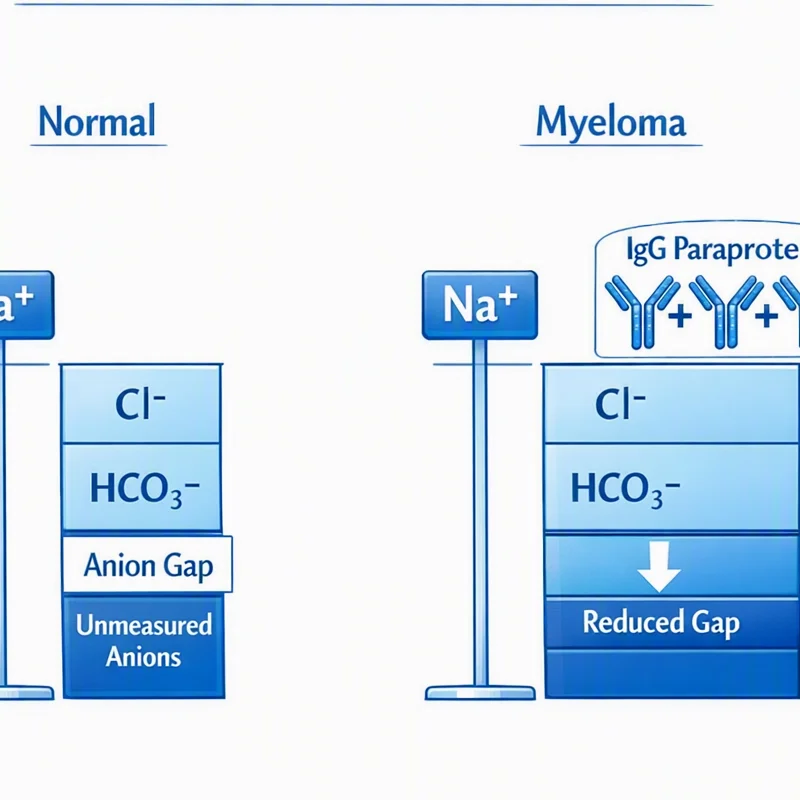
Low anion gap results are less common and are often related to lab variation, low albumin, or sometimes other medical conditions. Because albumin is a major unmeasured anion, reduced albumin can make the gap appear lower than it truly is. This is one reason the raw number should never be interpreted in isolation.
The clinical picture matters as much as the number itself. A patient with suspected critical illness, poor perfusion, or evidence of acidemia may need further evaluation even if the gap is only mildly abnormal. The most useful approach is to combine the anion gap with bicarbonate, pH, lactate, and the overall presentation.
Correcting the Anion Gap for Serum Albumin
Correction for albumin is important because hypoalbuminemia can conceal a clinically significant elevation in the anion gap. Since albumin contributes to the normal unmeasured anions in blood, a low albumin level decreases the expected gap and may make the result seem normal.
That is why the anion gap after correction is often more informative than the unadjusted value. If serum albumin is below normal, clinicians may revise the number upward to better estimate the true acid burden. This becomes important especially when evaluating lactic acidosis or other causes of high anion gap metabolic acidosis in hospitalized or critically ill patients.
Account for the correction when the lab pattern does not match the clinical picture. For example, a patient with clear signs of metabolic acidosis and a suspiciously normal gap may still have elevated acids if albumin is low. In that situation, relying on the uncorrected result alone could slow the detection of an important problem.
The key point is that albumin correction improves anion gap interpretation and aligns the calculation more closely with physiology. It helps uncover an increased anion gap that would otherwise be underestimated because of hypoalbuminemia. In practice, this adjustment is a routine step when reviewing lab test results https://anion-gap-chart972.theglensecret.com/how-excess-albumin-alters-the-anion-gap in patients with acute illness.
Other Causes of High Anion Gap Metabolic Acidosis
Although lactic acidosis is a leading cause, it is not the only possible explanation for an elevated gap. A systematic differential diagnosis should also include ketoacidosis, renal failure, toxic alcohols, and uremia. All of these conditions can raise the anion gap by creating unmeasured acids or impairing normal acid clearance.
Ketoacidosis is often seen in diabetes, starvation, and alcohol-related illness. Ketone bodies build up and consume bicarbonate, producing metabolic acidosis with an increased anion gap. In the right clinical setting, the combination of hyperglycemia, dehydration, and acid-base abnormalities can readily point toward this diagnosis.
Renal failure can increase the gap because the kidneys are unable to excrete acid effectively. As acid retention worsens, uremia may develop, adding more unmeasured anions into the circulation. This pattern often appears alongside other abnormalities in the electrolyte panel and may be part of a broader picture of systemic illness.
Toxic alcohols are another major cause because they produce acidic metabolites after ingestion. These cases can be dangerous and may present with a severe metabolic derangement before the exposure is recognized. Because the presentation can intersect with lactic acidosis, the anion gap helps signal that a serious toxic process may be underway.
When the gap is high, it is helpful to think in terms of acid sources rather than a single disease. The calculator gives a clue, but the final diagnosis depends on context, additional testing, and thoughtful clinical reasoning.
Reading Results within Clinical Context
The anion gap is most useful when evaluated alongside an arterial blood gas, pH, and bicarbonate level. These measurements show whether the patient is acidemic, how severe the disturbance is, and whether compensation is occurring. Together, they clarify whether a true metabolic acidosis is present and whether the body is mounting a compensatory response.
As an example, a low bicarbonate level with an elevated anion gap supports high anion gap metabolic acidosis. If the arterial blood gas also shows a low pH, the acid-base disorder is more evident. If pH is near normal, there may be a mixed disorder in which respiratory or metabolic compensation is partly offsetting the abnormality.
The base excess can provide additional insight of information by estimating the metabolic component of the disturbance. A negative base excess generally supports an acidotic state, while a positive value suggests excess base. This is why clinicians often pair the anion gap with blood gas data rather than relying on a single number.
Clinical symptoms matter as much as the labs. Weakness, rapid breathing, confusion, nausea, abdominal pain, or signs of poor perfusion can strengthen suspicion for a significant acid-base disorder. The combination of symptoms and lab findings helps determine whether the patient is stable or needs urgent intervention.
In short, the anion gap is a starting point for reasoning, not the finish line. It is one piece of the puzzle that becomes much more valuable when combined with serum lactate, blood gas analysis, and the overall clinical picture.
When to Seek Prompt Clinical Assessment
An increased anion gap can suggest a serious medical emergency, especially when paired with signs of sepsis, shock, or poor perfusion. If the patient has hypotension, deteriorating mental status, or severe respiratory distress, urgent evaluation is needed. These findings may signal rapidly progressive lactic acidosis or another dangerous cause of metabolic acidosis.
Altered mental status is especially concerning because it can reflect worsening acidosis, inadequate oxygen delivery, or organ dysfunction. When this appears alongside an increased anion gap, it may indicate a critical illness that requires immediate assessment and treatment. Delays can allow tissue hypoxia and metabolic derangement to worsen quickly.
Seek urgent care if the anion gap is elevated and the patient appears unstable, especially if there is evidence of infection, dehydration, toxin exposure, or kidney failure. A rising lactate level, severe acidemia on arterial blood gas, or a sharp drop in bicarbonate can all point to a worsening condition that should not be monitored casually.
The key message is straightforward: the anion gap calculator can identify a problem, but the response depends on the clinical setting. When the result fits with shock, sepsis, or serious respiratory and circulatory compromise, prompt evaluation can be lifesaving.
FAQ
What is the anion gap in lactic acidosis?
In lactic acidosis, the anion gap is often elevated because lactate is an unmeasured anion that accumulates in the blood. This increase reflects metabolic acidosis caused by acid buildup and decreased bicarbonate. The exact value depends on the lab values and whether albumin is normal or low.
How does an Anion Gap Calculator help identify lactic acidosis?
An Anion Gap Calculator helps identify lactic acidosis by turning serum sodium, serum chloride, and serum bicarbonate into a calculated gap that can suggest an increased anion gap. If the result is high, it raises concern for lactate accumulation and other causes of metabolic acidosis. It is most useful when combined with serum lactate and clinical assessment.
Can a normal anion gap rule out lactic acidosis?
No. A normal anion gap does not fully rule out lactic acidosis, particularly if the elevation is early, mild, or hidden by hypoalbuminemia. Mixed acid-base disorders can also cause the gap appear less abnormal than expected. If clinical suspicion is elevated, lactate testing and blood gas analysis may still be needed.
Should the anion gap be corrected for albumin?
Yes, especially when serum albumin is decreased. Albumin correction helps reveal a corrected anion gap that may more closely reflect the true acid burden. This is important because hypoalbuminemia can make an elevated gap look spuriously normal.
What other conditions can cause a high anion gap besides lactic acidosis?
Other common causes include ketoacidosis, renal failure, toxic alcohols, and uremia. These conditions can all produce a high anion gap metabolic acidosis through distinct mechanisms. The correct diagnosis depends on the overall lab pattern, symptoms, and clinical context.